

Good Friends, Great Pizza
Updated: Aug 12
“Pizza is for everyone.”
Mikhail Gorbachev
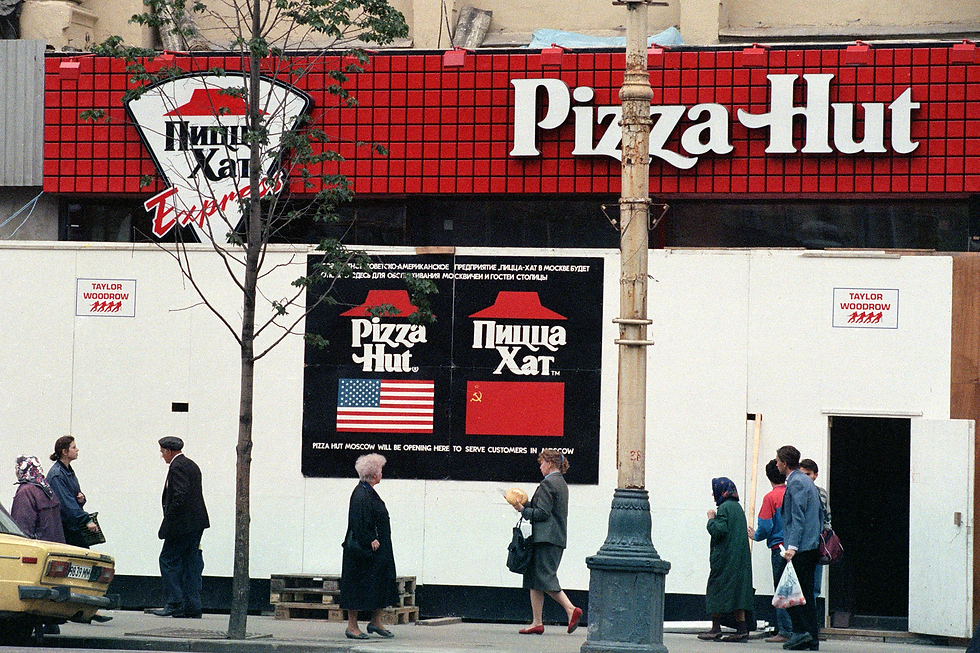
In 1990, Pizza Hut was among the first American restaurant chains to open in Moscow, Russia. The introduction of fast-food restaurants and other western goods were the direct result of President Mikhail Gorbachev’s economic and political reforms termed perestroika (“restructuring”) and glasnost (“transparency”). These market reforms opened the Soviet Union to material and cultural goods from the outside world.
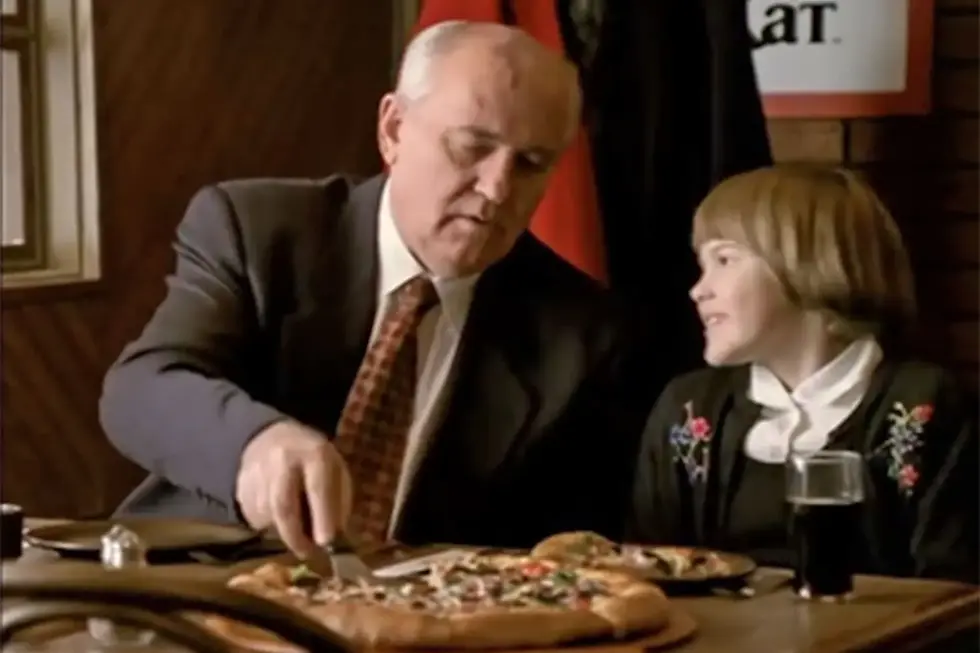
In 1998, Gorbachev appeared in a Russian television commercial that aired internationally and specifically addresses the leader's political legacy. The advertisement has been described as an example of capitalism’s victory inside the former Soviet Union. It represents the first wave of Western businesses that took advantage of the arrangements that were a part of Gorbachev’s signature reforms. The opening of a Pizza Hut in Moscow wasn’t the population’s first exposure to fast food, as a McDonald’s had opened a few months earlier, in the city. The presence of major Western brands in the Soviet lands was divisive, and the ad expressly shows those negative and positive reactions among Russian citizens.
The commercial opens with views of Moscow’s iconic landmarks, most notably the Cathedral of Christ the Saviour and St. Basil’s Cathedral. The first few seconds of the commercial present a stark contrast between Moscow’s grey and brown built environment and a young girl wearing a bright red coat. Shadowy silhouettes of Russia’s characteristic bulbous domes form a dark background for Pizza Hut’s bright signage. Each scene contains the Pizza Hut emblem in a shade of bright red that matches the girl’s coat, which hangs behind her on the interior of the restaurant as well, and draws the viewer’s eye to the emblem. This visual contrast is maintained throughout the commercial and suggests that the western icon has brought color and life to the otherwise muted country. That visual contrast instantly represents stereotypical differences between American capitalism and the former Soviet socialist ideology.
At the commercial’s opening, Gorbachev is seen walking under an umbrella with his granddaughter, Anastasia Virganskaya with St. Basil’s Cathedral in the background. The use of an umbrella is a symbolic choice. Though parasols and canopies have traditionally been used to highlight rulers’ power throughout history, in this case, the umbrella presents Gorbachev as a humble, thoughtful figure holding his granddaughter’s hand. In a country dotted with formal statues of leaders and ideological figures such as Lenin and Stalin, this image presents a stark contrast to that past. Moreover, Soviet leaders were usually shown in rigid poses and in staged, authoritative settings. The fact that Gorbachev is then shown sitting casually at a fast-food restaurant is a meaningful break with that tradition. He is also presented as a private citizen with his family rather than as a commanding official, reinforcing the idea that the Soviet era is over.
When Gorbachev and his granddaughter Anastasia enter the Pizza Hut, they sit in a corner of the restaurant. A conversation begins at another table amongst a family that includes a middle-aged man, a young adult man, a child, and an elderly woman. The family speaks in Russian with English subtitles provided:
“It's Gorbachev!” says the middle-aged man.
“It is Gorbachev,” the younger man responds.
"Because of him, we have economic confusion!" the middle-aged critic says.
"Because of him, we have opportunity!" the younger one counters.
"Because of him, we have political instability," the first man argues back.
The final word comes from the oldest person at the table, an elderly woman. She says, "Because of him, we have many things ... like Pizza Hut.” And in response, all three say, "Hail to Gorbachev!"
The ad closes with the narrator’s voice stating, "sometimes nothing brings people together like a nice hot pizza from Pizza Hut.”
It has often been noted that American popular culture, including music, movies, and fast food, won the Cold War. And certainly, the television commercial references that idea. The closing phrase refers also to the irony of the Cold War. After decades of military escalation, culture rather than weapons brought about the end of the conflict. The tone of the advertisement and its placement of a major world leader in a warm, friendly, casual environment suggest the ability of shared cultural tastes to bridge broader political conflicts. The ad closes with the visual slogan "Good Friends. Great Pizza.”



Comments