

Sites and Backstories
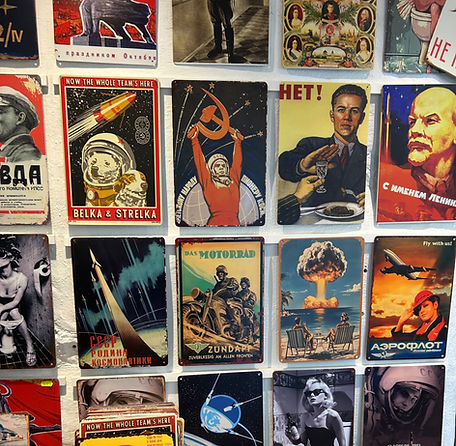
The visual landscape of the former USSR contains multiple layers. Traditional building types exist alongside brutalist experiments of the modern Soviet era and newer waves of construction in the post-independence period. Many of the lands, from the Caucasus through Eastern Europe and Central Asia have seen centuries of foreign invasions and occupations; rulers’ statues have been raised, demolished, altered, and appropriated. These “shorts” provide snapshots and stories of this complex, layered, and ever-changing landscape.
01
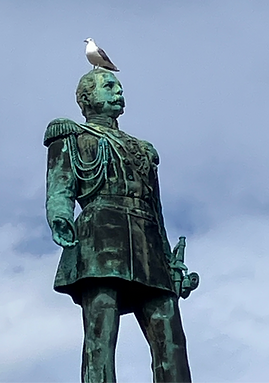
Statue of Alexander II, Helsinki
State-sponsored monuments encourage public reactions. Over time, their meanings change, and they become targets for reinterpretation, appropriation, iconoclasm, and often become sites of protest. The statue may be used by protesters in a variety of ways. This statue of Tsar Alexander II in Helsinki's Senate Square became the stage for large a demonstration during the Russification of Finland which began in 1899. Locals protested against the Russification efforts of Tsar Nicholas II by placing excessive amounts of flowers on this statue of their preferred Tsar, Alexander II.
02
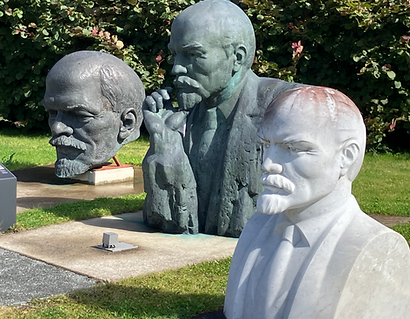
Soviet Statue Graveyard, Tallinn
Behind Tallinn's Maarjamäe Palace, now a branch of the Estonian History Museum, rests a "graveyard" of Soviet-era statues. Strewn haphazardly across the field are statues of Stalin, Soviet soldiers, and several massive heads and busts of Lenin. The statues were strewn across the yard after Estonia gained independence in 1991. The way the Soviet statues are strewn around the yard demonumentalizes the statues, while still setting them in their historic past.
03
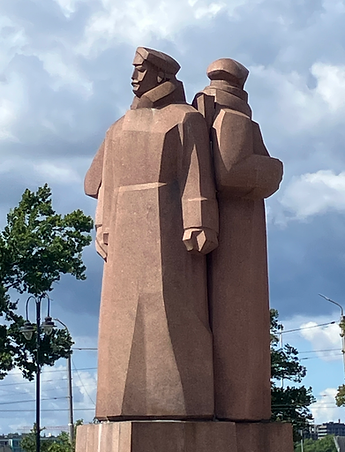
A Contested Monument: The Latvian Riflemen, Riga
A statue of three Latvian Riflemen occupies a prominent space on Riga's Daugava riverfront. The monument was designed to commemorate a battalion that defended the Baltic territories against the Germans during World War I. After the war, some soldiers went on to become Lenin's personal bodyguards and were known in that period as the "Red Riflemen." For this reason, some residents now view the monument as a symbol of the oppressive communist system and have called for its removal. Others believe that it is a necessary tribute to the Latvians who fought during the early years of WWI. The statue is now said to honor all Latvian Riflemen.
04
Memorial to the Victims of the Soviet Occupation, Riga
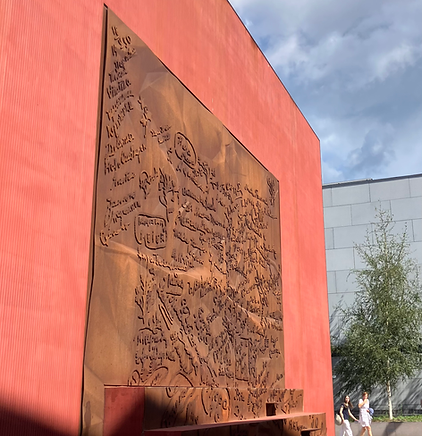
Remembrance can be expressed in many forms. One monument in Riga uses the image of Latvian textiles to commemorate the deportation of tens of thousands of Latvian citizens to Siberia. One side of the bronze wall displays the woven pattern of traditional Latvian textiles. The wall's reverse side is a bronze replica of the embroidery on Merija Stakle's handkerchief, now displayed in the adjacent Museum of the Occupation of Latvia. Stakle was deported to Siberia in 1941 along with her 17-year-old daughter and husband. She took down names of other deportees and ultimately embroidered them with thread taken from their clothing. The memorial commemorates these names in welded bronze.
05
Memorial to the Victims of the Soviet Occupation, Riga
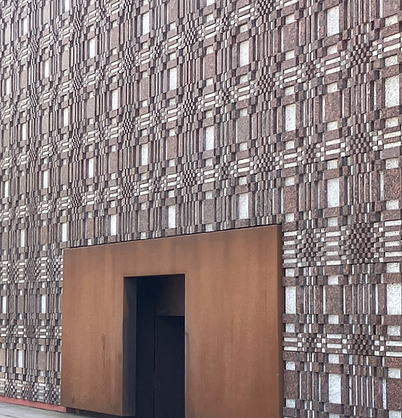
This memorial reflects a radical departure from the commemorative vocabulary of monumental public statues, structures, and gravestones in the Baltic states. Red and gray granite blocks are arranged in the geometric patterning of traditional Latvian blankets. A more private space, called the "wailing wall" faces away from the public square and its Red Riflemen statue. Its facade is a replica of Merija Stakle's hand-embroidered handkerchief, another image that evokes softness, care, intimacy, and women's work. The memorial includes a soundscape by artist Voldemars Johansons, who uses vibrational sounds to create a solemn atmosphere at the site.
06
Site of the Old Jewish Cemetery, Snipiskes, Vilnius
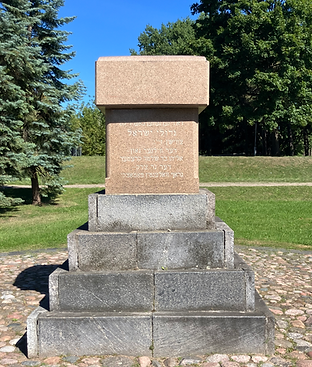
The oldest Jewish cemetery in Vilnius was founded north of the Old Town in the 15th century. In 1817, the Russian Tsar's administration ordered the cite closed and set to replace it with a fortress. Later, under the Soviet Socialist Republic, graves were transferred to another cemetery in Vilnius and the grounds were used for the Palace of Concerts and Sports, completed in 1971. A number of Talmudic scholars were buried at the cemetery, including Eliyohu ben Shloyme Zalmen, known as Vilna Gaon (1720-1797). Upon its desecration in 1948, his remains were moved to the Jewish cemetery on Olandy Street, and then in 1963 to the Jewish cemetery in Suderve.
07
Palace of Concerts and Sports, Vilnius
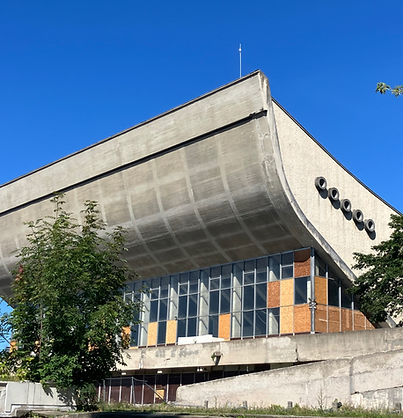
Emblematic of Soviet modernist architecture, this brutalist structure was built on the site of the Piramont cemetery, the oldest Jewish cemetery in Vilnius. In the 1930s, the Polish municipal administration initiated plans for a sports complex on the site; however, it was not completed until 1971. It housed local and international basketball games until the 1990s, and seated 4,400 spectators. In 1988, it hosted the meeting of Sajudis, the Lithuanian political organization that led the struggle for independence, and in January of 1991 a public funeral for the victims of the January Events took place at the Palace.
08
KGB Museum, Vilnius
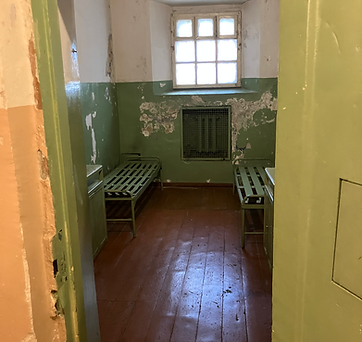
In 1992, the basement of the KGB building in Vilnius was converted into a museum. The three stories above were made into a Museum of Occupation and Freedom Fights which chronicles the Soviet occupation of Lithuania, cattle car deportations to Siberia and the Forest Brothers who resisted the Soviets. The basement includes prison cells, padded isolation cells, and interrogation rooms where prisoners were questioned. It also contains an execution chamber, which was used particularly during the late 1940s and early 1950s.
09
Victims of Communist Terror Memorial, Riga
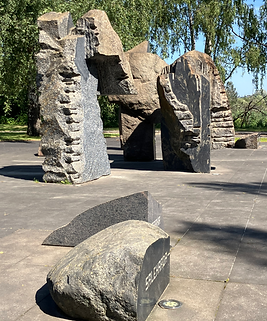
Located at Tornakalns Station, a set of granite sculptures memorializes the victims of communist terror. The site was chosen to commemorate mass deportations from Latvia to labor camps across the USSR. The image of broken stones symbolizes separated families and the three standing stones symbolize three generations of deportees.
10
Railway Memorial, Tornakalns Station Riga
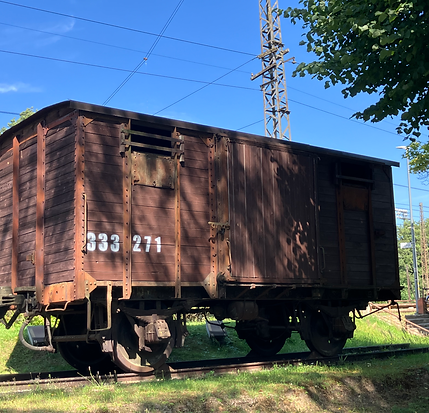
During the Soviet occupation of Latvia, tens of thousands of citizens were sent to labor camps in Siberia. The most infamous dates for deportation are June 14, 1941, and March 25, 1949, when roughly 15,000 and 42,000 people, respectively, were taken in the middle of the night and forced into cattle cars. A historical railroad car stands at Tornakalns Station in memory of these people at the station from which many began their horrible journey. A sign on the car reads: “In such railroad cars, more than 15,000 residents of Latvia were deported to distant regions of the USSR on June 14, 1941. Guilty of this crime is the communist regime. Its executors were the members of state security apparatus and their supporters.”
11
“Stalin’s Birthday Cake:” The Academy of Sciences Building, Riga
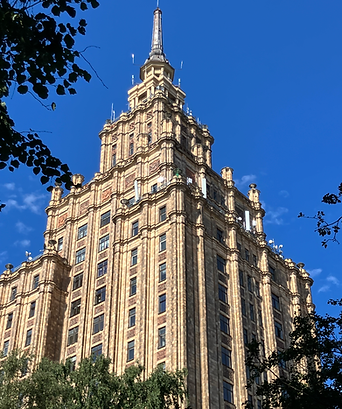
The Academy of Sciences Building in Riga was modeled on Stalin’s “Seven Sisters” skyscrapers, built in Moscow to rival the Empire State Building in New York City. They are representative of Stalinist Socialist Classicism, a style based upon stately neoclassical motifs combined with the socialist symbols. The building in Riga is decorated with hammer and sickles as well as Latvian folk motifs. The spire was originally decorated with a wreath and five-pointed star, which was removed after Latvia regained independence in 1991. Local nicknames for the site include “Stalin’s birthday cake” and “The Kremlin.”
12
KGB Museum, Riga
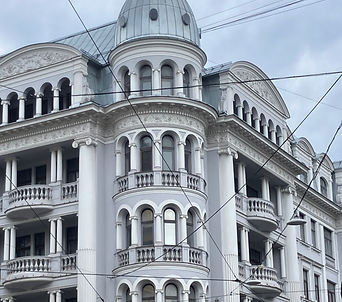
An Art Nouveau building at the corner of Brivibas and Stabu streets, is known to locals as "The Corner House." Once the center of Soviet surveillance in Riga, replete with prison cells and interrogation rooms, the site was reframed as a museum that presents the stories of those who lived through Soviet oppression. Exhibitions detail operations of the secret police, political arrests, and resistance to occupation. Museum text describes the site it as a "memorial for those who suffered within these walls."
13
Freedom Monument, Riga
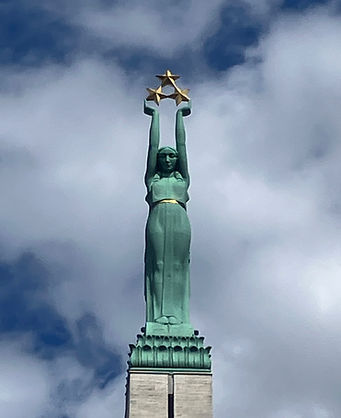
The Freedom Monument in Riga was erected in 1935 on the site of a statue of Peter the Great. It was created to memorialize those killed during the Latvia War of Independence (1918-20). Following the Soviet occupation of Latvia in 1940, Soviet authorities considered demolishing the monument. Concerned about resistance from locals, the monument was left standing, but its symbolism was reinterpreted by the Soviets: the three stars were said to stand for the newly created Baltic Soviet Republics (Estonian SSR, Latvian SSR and Lithuanian SSR) held aloft by Mother Russia. During Soviet occupation, gatherings near the Freedom Monument were forbidden. For Latvians, the monument remained a symbol of national independence, and by the end of the 1980s, large-scale independence rallies were centered around the monument.
14
A Little Known History
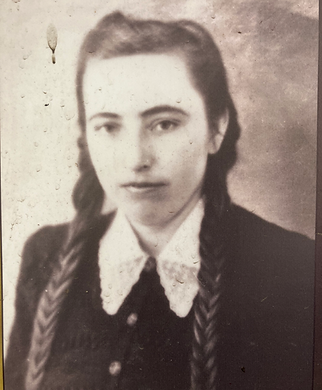
In 1952, Elena Grybinaite (1933-2013) was a Lithuanian student and member of an underground organization when she was arrested and sentenced to 25 years of imprisonment. On August 2, she was deported to Kengir prison camp in the Kazakh SSR. She participated in the historic Kengir Uprising of 1954, in which inmates seized the entire camp compound and held it for weeks before Soviet armed forces suppressed the rebellion. Following the uprising, Elena was sent to a labor camp in the Irkutsk region and was released back to Lithuanian in 1956.
15
Latvija Hotel, Riga
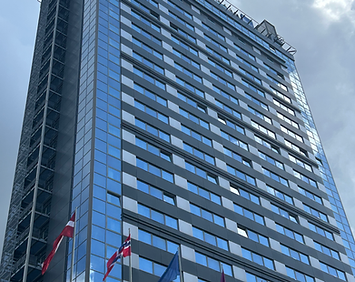
Designed by the architect Arturs Reinfelds, Riga’s Latvija Hotel was constructed between 1967 and 1978. The hotel was managed by the USSR State Committee for Foreign Tourism and was used for accommodating delegations of foreign and Soviet tourists. Its upper floors housed a KGB telephone tapping unit.
16
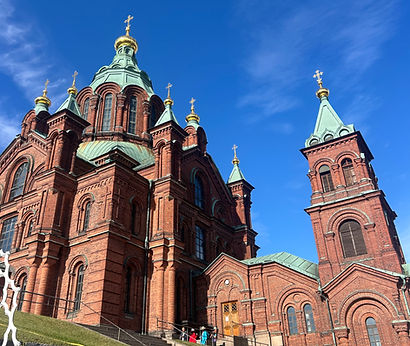
Uspenski Cathedral, Helsinki
In 1812, after the Russians moved the capital of Finland from Turku to Helsinki, Tsar Alexander I decreed that 15 percent of salt import taxes would fund two churches in the city, one Lutheran and one Orthodox. Designed by Russian church architect Aleksei M. Gornostajev, Uspenski Cathedral was consecrated on October 25th, 1868. It is considered the largest Orthodox church in Northern Europe. Fun fact: 700,000 bricks were brought over on barges from the Bomarsund Fortress that had been demolished in the Crimean War.
According to the Finnish Government: “On 24 February 2022, Russia launched an invasion of Ukraine in breach of the UN Charter and international law. Finland strongly condemns Russia’s military actions in Ukraine and unequivocally supports Ukraine’s independence, sovereignty, autonomy and territorial integrity." One can see signs of solidarity throughout the capital.
UPDATE, July 30, 2026: Temporary protection for Ukrainians fleeing the war is extended until March 4th, 2028.
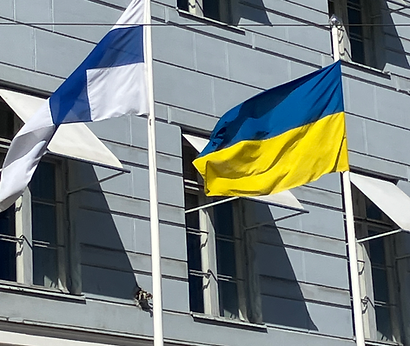
Finnish Statement of Solidarity, Helsinki
17
18
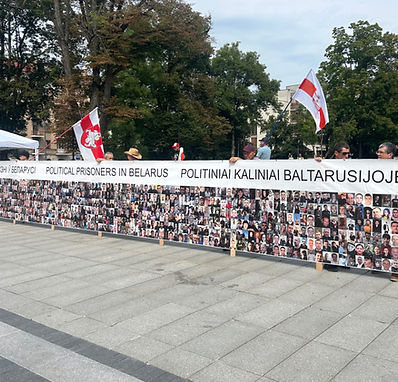
Safe Haven for Protestors, Vilnius
Belarus and Lithuanian share a 680-kilometer border. The two countries have deep historical ties dating back to the Grand Duchy of Lithuania, which encompassed much of modern Belarus. As a result, the two nations have many shared cultural and political movements, including joint uprisings and social democratic movements in the 19th and early 20th centuries. Diplomatic relations between were formally established December 30,1992. More recently, Lithuania has imposed sanctions on Belarus and has been vocal in rejecting the legitimacy of Alexander Lukashenko’s government, linking sanctions relief to democratic reforms. Lithuania has consistently supported Belarusian civil society and opposition figures, providing a safe haven for activists.