

Sheepskin Hats: from Commodity to Identity in the Post-Soviet States
In the Caucasus, it is said that “if the head is intact, a papakha should be on it.”
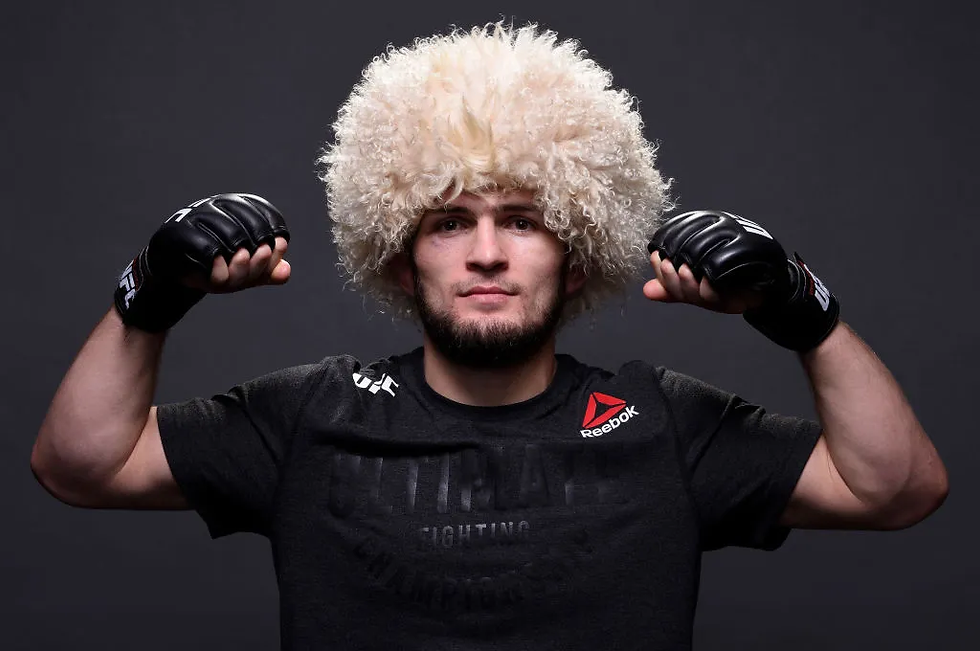
The papakha, or papaq, is a spherical sheepskin hat worn by men across the Turko-Persian world, which spans from the Caucasus mountains through the steppes of Central Asia to Afghanistan. Regional variations in the hats resulted from the distinct coloration and qualities of the sheep native to each region. For example, the shaggy papakhas worn in the Caucasus are most commonly made from the Karakul breed of sheep found in the states of Georgia, Dagestan, and Chechnya. In Azerbaijan, on the other hand, hats are typically made from Karabakh sheep, a breed exclusive to the region.
Throughout the Central Asian steppes and the Caucasus, sheepskin hats served a very practical function due to the harshness of the landscape. Sheep played an essential role for nomadic populations that occupied the Central Asian steppes and Caucasian mountain landscape. Sheep provided both milk and meat and were a high protein food source in an otherwise barren environment. Pelts were highly valued for making warm garments, and the outer hair was separated and spun to make carpets and felt. For these reasons, sheep have been an important source of income for nomadic populations. As a result, sheepskin hats came to be identified with the wealth and status of their owners.
In addition, the distinctive form of the papakha has long been identified with masculinity and military prowess. In the Caucasus, it is said that a papakha is worn “not for warmth, but for honor.” Another proverb states that the most important things for a Cossack are his shashka (a special kind of sword) and his papakha. The sheepskin hats were associated with tribal feuds, and it is said that a man donning a papakha is only allowed to remove the hat in particular cases; for example, when requesting the end of a blood feud between clans.
If a man threw his papakha on the ground in the heat of an argument, this meant he was ready to fight to the death. Stated more brutally, “if the head is intact, a papakha should be on it.”
Today, the papakha is considered the most precious item in the Cossack military uniform, and although many Cossack soldiers will remove it when entering a building, they will make sure that it remains by their side. The hat’s meaning shifted during the Russian revolution and the period of Soviet expansion into the Caucasus. During the 1917 revolution, restrictions were imposed on the Cossack national dress and the papakha was replaced with the Communist budenovka. The sheepskin hats returned in 1936; however, Cossacks were only allowed to wear short, black papakhas and a red star was sewn on its front. In 1940, the papakha became part of the uniform of the Russian Red Army, and following the death of Stalin it became a popular among members of the Soviet Politburo.
Since Perestroika, the papakha has once again become a symbol of national, tribal, and ethnic identities in the post-Soviet states. Today, the hat is perhaps best known in the west because it is worn prominently by world-class mixed martial arts (MMA) athletes, for whom it represents both local identity and elite fighting skill. It also links the modern fighters to the region’s longstanding reputation for producing the world’s greatest horsemen, wrestlers, and soldiers. In the Soviet political realm, President Vladimir Putin can be found wearing a papakha styled after the traditional winter hat of high-ranking Russian military officers. He revived the style after it was abolished by Boris Yeltsin in 1994 in favor of simple shapkas.
Like other cultural goods that became ideological symbols of the Soviet Union, sheepskin hats negotiated multiple complex identities. They absorbed local traditions into a broader “Soviet” aesthetic. In doing so, they turned diverse cultural items into symbols of a single Soviet identity. Within the Communist system, they could stand for durability, practicality, tradition, and equality. In this sense, they embodied the ideological rejection of Western consumerism. Yet, on the other hand, for President Putin, high-ranking military leaders, and even contemporary MMA stars, they can articulate status, power, elitism, and prestige.


Comments